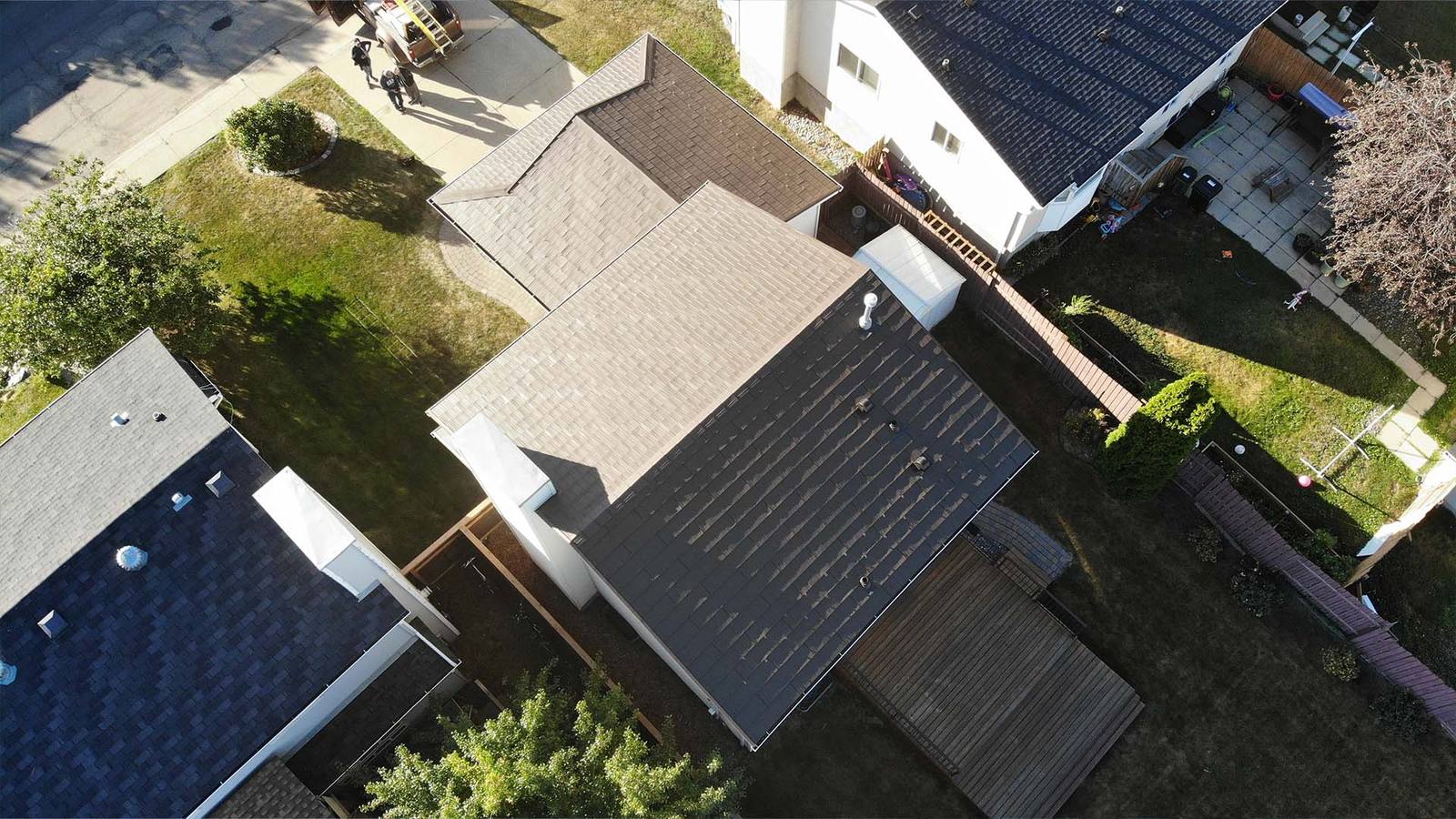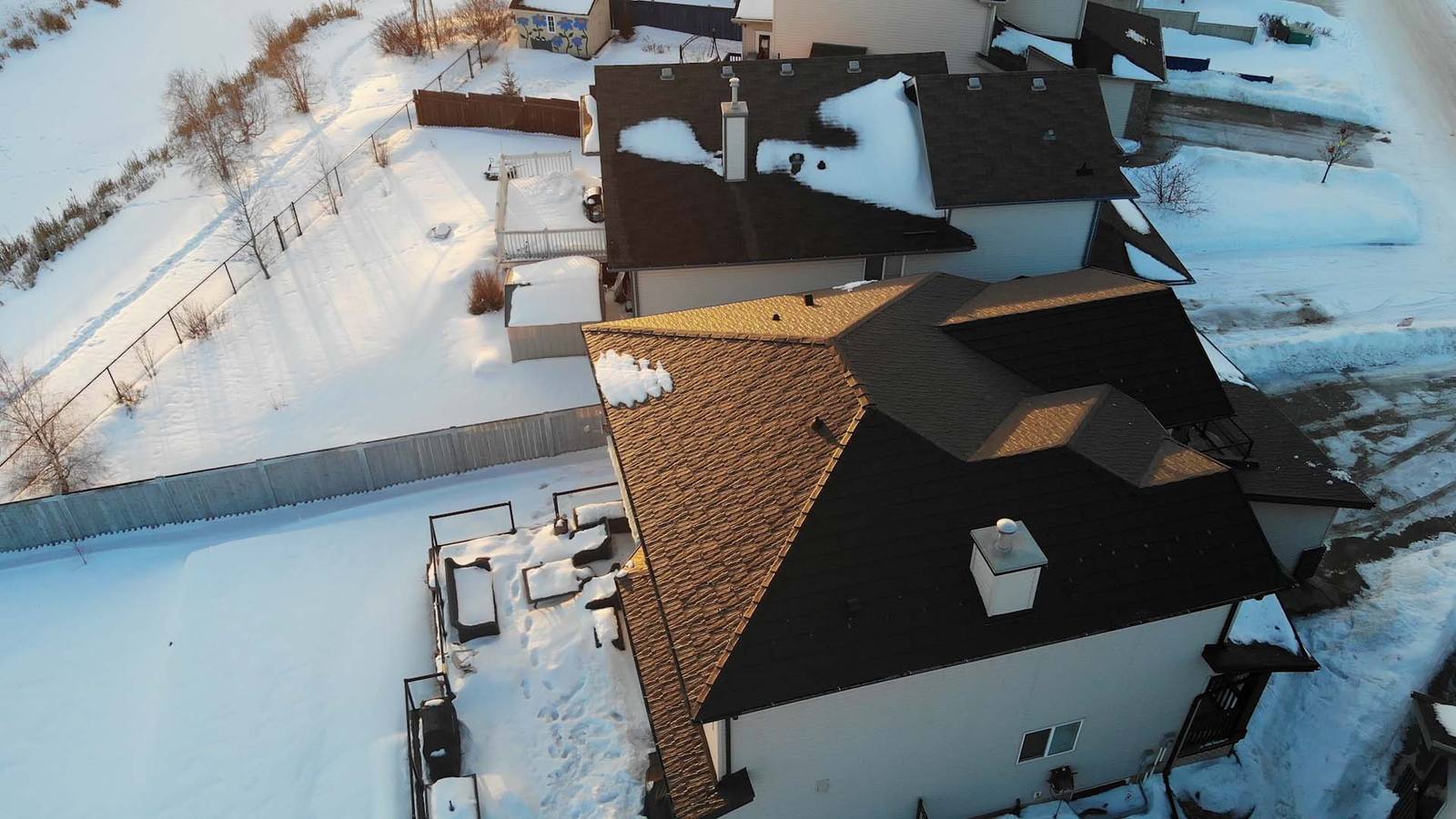
If you own a home anywhere in the Edmonton region, hail isn't a hypothetical — it's a near-certainty on a long enough timeline. Central Alberta sits in one of the most hail-prone corridors in the country, and the single most common question we get from homeowners looking at metal is a fair one: does a metal roof actually stand up to hail, or does it just dent? This is the honest, Alberta-specific answer — what hail does to different roofs, what the impact ratings really mean, whether metal dents, and how it changes your insurance.
The 30-second answer
Yes — metal is one of the best roofs you can put over your head in a hail zone, and it's a big part of why so many Alberta homeowners switch after a storm. Steel roofing panels are tested and rated for impact, they don't crack or shed their protective surface the way asphalt does, and most Alberta insurers now treat an impact-rated metal roof as a lower risk than asphalt. The one honest caveat is cosmetic: very large hail can leave dents on some metal roofs. That's an appearance question, not a leak question — and it's one you can largely design around, which we'll get to below.
What hail actually does to asphalt vs. metal
The reason the two materials behave so differently comes down to what they're made of. An asphalt shingle protects your home through a layer of mineral granules bonded to an asphalt-saturated mat. When hail strikes, it knocks those granules loose and bruises the mat underneath — and once the granules are gone, that spot is exposed to UV and starts to fail. The damage is often invisible from the ground, which is why so many hail-damaged asphalt roofs quietly leak months later. (Our guide on how to spot hail damage on your roof walks through what to look for.)
Steel behaves completely differently. It has no granules to lose and no brittle mat to bruise. A hailstone that would destroy an asphalt shingle bounces off a steel panel and, at worst, leaves a cosmetic dent — the panel's structural integrity and its ability to shed water are unaffected. Here's the practical contrast Alberta homeowners see:
- Asphalt: granule loss, bruised and cracked mat, hidden damage, leaks that show up later, and an insurance claim after most serious storms.
- Metal: at most a cosmetic dent on the largest hail, no loss of waterproofing, no granules to shed, and typically no claim at all.
- Asphalt's damage is cumulative — every storm shortens its life. Metal's isn't.
Impact ratings: what Class 4 and UL 2218 mean
"Impact-rated" isn't marketing — it's a defined test. The standard is UL 2218, which drops steel balls of increasing size onto a roofing sample and checks the back side for cracking or rupture. The scale runs Class 1 to Class 4, and Class 4 is the highest — the sample has to withstand a 2-inch steel ball (roughly the energy of large hail) with no rupture. Most quality steel roofing systems, including the ones we install, achieve Class 4.
Why it matters to you in Alberta comes down to two things: performance and paperwork. A Class-4 roof is genuinely more survivable in the storms this region gets, and — just as importantly — many Canadian insurers ask for that rating before they'll apply an impact-resistant roofing discount. It's the difference between a roof that resists hail and one you can also prove resists hail. For the underlying science, the Insurance Bureau of Canada consistently ranks hail among the costliest perils for Prairie homeowners.
Will a metal roof dent? The honest answer
This is the real question behind the question, so here's the straight version. Small and medium hail — the overwhelming majority of what falls — does not dent a properly specified steel roof. Very large hail (golf-ball-plus) can leave dents on some metal roofs, particularly thinner-gauge or very flat panels. That damage is cosmetic: the roof still keeps water out and still carries its warranty. But if the look matters to you, you can design the risk down substantially:
- Gauge: heavier steel (24-gauge over 26- or 29-gauge) resists denting far better. We recommend heavier gauge on visible residential roofs.
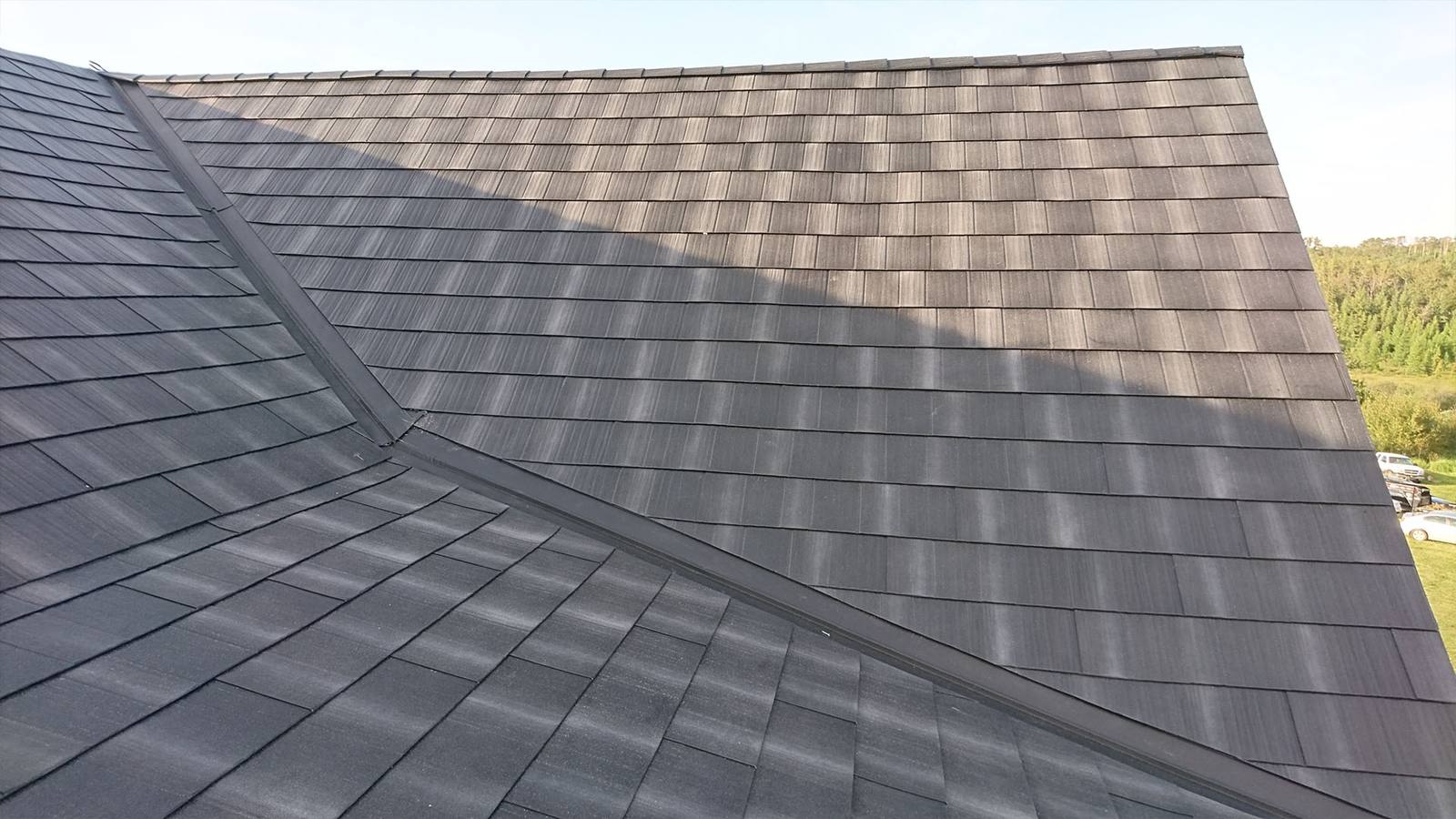
- Profile: textured and dimensional profiles like metal shingles and European metal tiles hide minor dings almost completely; broad flat panels show them most.
- Finish: a quality PVDF (Kynar 500) finish keeps its colour and appearance for decades, so the roof still looks new even after ordinary weather.
In practice, a heavier-gauge standing seam or a dimensional metal shingle roof will come through virtually every Alberta hailstorm looking exactly as it did the day before — while the asphalt roofs around it are generating claims.
Hail, insurance, and your premium
This is where metal quietly pays for itself in a hail zone. Every hail claim on an asphalt roof is a deductible out of your pocket, a mark on your claims history, and — as roofs age — an insurer increasingly likely to raise your premium or decline to renew coverage on an aging asphalt roof. A metal roof steps you out of that cycle entirely: no granule loss means no claim, no claim means no deductible and no premium pressure, and many Alberta insurers offer a discount for an impact-resistant roof in the first place.
There's also a smart financial move a lot of Albertans make: if your asphalt roof is already hail-damaged, you can often use the insurance settlement as the foundation for upgrading to metal. Insurance typically covers the cost of an equivalent asphalt replacement; you pay the difference for the metal upgrade and never file a hail claim on that roof again. Our storm & hail damage repair team documents the damage and meets your adjuster on site, and our step-by-step hail damage insurance claim guide walks through exactly how to do it.
Which metal roof is best for hail in Alberta?
All quality steel roofing outperforms asphalt in hail, but if hail is your top concern, here's how the profiles we install stack up:
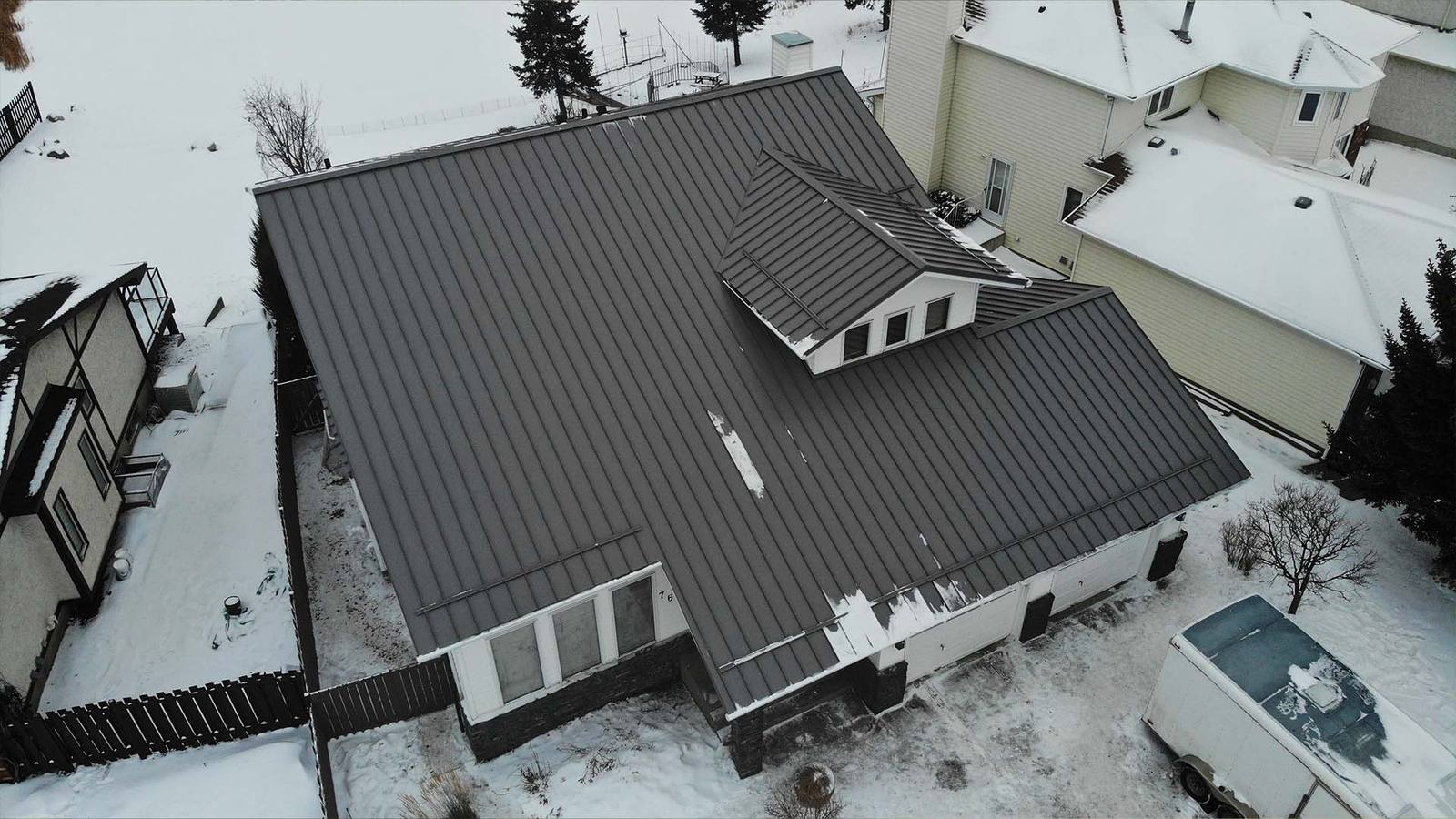
- Standing seam — Class-4 rated and the most weather-tight system; choose a heavier gauge if you want the flat panels to resist visible denting. See standing seam roofing.
- Metal shingles — the best at hiding any cosmetic marks thanks to their dimensional, textured surface; an excellent hail choice for homes that want a traditional look.
- Metal tiles — European stamped profiles that combine Class-4 impact performance with strong curb appeal.
- Corrugated steel — the same impact rating at the lowest cost, ideal for shops, garages, and budget-minded roofs; see corrugated metal roofing.
For a full head-to-head on cost, lifespan, and look, our standing seam vs metal shingles vs tiles comparison breaks down which suits which home.
The Alberta bottom line
Are metal roofs good for hail? In a province that sees damaging hail every few years, they're arguably the best mainstream choice you can make. A Class-4 steel roof won't crack, won't shed granules, won't spring the delayed leaks that hail leaves in asphalt, and won't drag you back into the claim-and-premium cycle every storm season. The worst case is a cosmetic dent on the largest hail — and with the right gauge and profile, even that is easy to design around. Compare the full long-term math in our metal roof vs asphalt shingles guide, and when you're ready, request a free quote — we'll deliver a fixed written price within one to two business days.
Ready to start your project?
Get a free, fixed-price written estimate from an IronWrap estimator.